
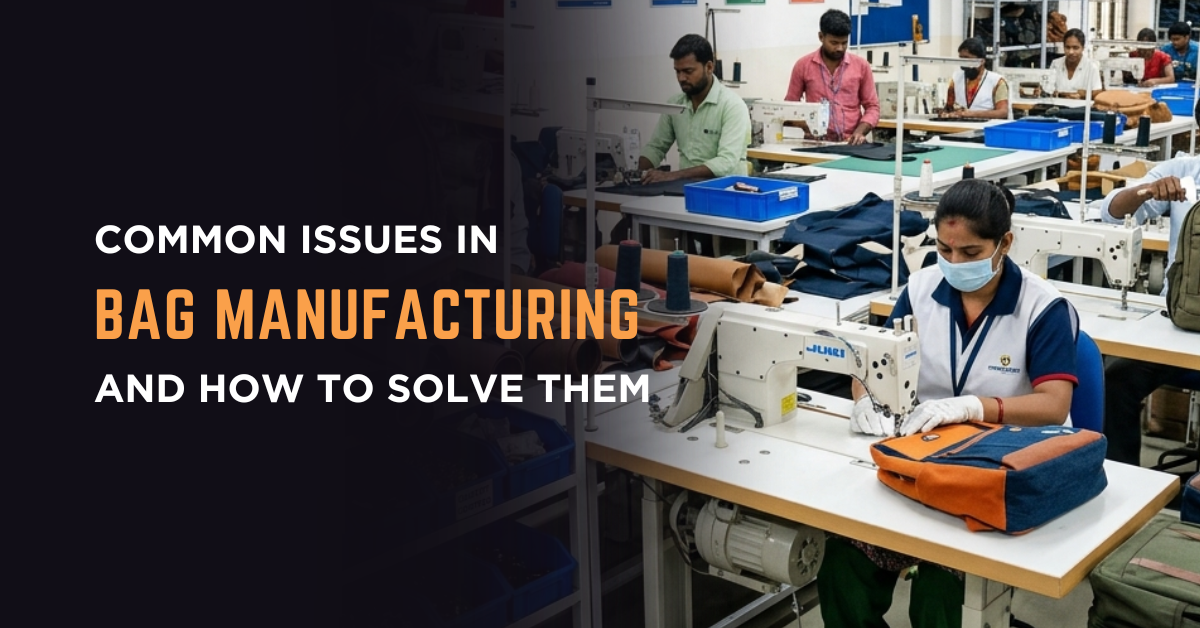
Common Issues in Bag Manufacturing and How to Solve Them
The world bag industry is rapidly growing. Creating a perfect bag is no easy task regardless of whether you have an independent start-up business or are managing a big retail brand. Understanding the most common issues in bag manufacturing will help you to develop a good range of products.
A lot of companies have problems with bags being late or not being made right because they do not know how bags are made. Working with a company can help you avoid these problems.
Let us look at the mistakes that bag factories make the most and how you can fix these bag problems easily.
Uneven Stitching and Seam Failures
Your complete bag depends on stitching. Poor needle size and excessive thread tension can result in seams bunching or separating from the bag once under pressure.
- Issue – Loose threads, crooked lines, and weak corners will make the finished bag look as if it were cheaply made and would result in a short wearing period for consumers.
- Solution – Make sure you request a pre-production sample from your factory. Compare the number of stitches per inch; a durable bag should have approximately 6 to 8 stitches per inch. To create a clean line during your production process you need to have either high-quality sewing machines or properly trained sewing operators.
Low-Quality Zippers and Hardware Problems
Hardware is often the first thing to break on a backpack or handbag. If a zipper splits or a buckle snaps, the customer will likely return the item immediately.
- The Problem: Zippers getting stuck, broken teeth, or peelings of metal after several weeks of wear.
- The Resolution: Use only high-quality hardware from reputable manufacturers such as YKK or SBS. If the bag manufacturer is reputable, they will already be using a company that provides high-quality hardware products. You should never take shortcuts in the quality of parts and materials used for zippers, respectively.
Fabric Misalignment and Pattern Cutting Errors
While cutting fabric seems easy to do, there is a lot of precision involved in the process. If a pattern has been cut incorrectly, the bag will appear asymmetrical or lopsided when it is all put together.
The Problem: Straps that are not aligned, pockets that are misaligned, or mismatched designs at the seam.
The Solution: Use advanced tools such as digital laser cutting machines or high-quality acrylic molds, not chalk cutting. Make sure that your manufacturer implements quality control measures for the cutting of raw materials.
Wrong Material Selection and Weak Backing
A design can be aesthetically pleasing as a sketch; however, in reality, this only becomes apparent once you test the fabric out, as it may not support the shape because it has either too much flex or not enough stability. the weakness of the fabric used or the lack of flexibility.
- The Problem: The bag ends up collapsing into an unrecognizable pile, or the fabric cracks whenever it is folded.
- The Fix: Partner with a skilled bag supplier who will assist you in choosing the appropriate fabric weight measured in Denier/GSM.
Finding the Right Manufacturing Partner
Most of these common issues in bag manufacturing can be avoided by choosing the right factory from the start. A factory with its quality control team catches mistakes before the bags leave the production line.
If you want to eliminate these production risks, consider partnering with a trusted bag manufacturer in India. For instance, working with an expert team like Okda Lifestyle ensures your designs are handled with absolute precision.
As a bag manufacturer in Indore they focus on making bags that meet international quality standards with strong hardware and perfect stitching to protect your brand’s image.
Summary Checklist for Quality Control
Refer to the following checklist before confirming an upcoming production run:
- is the stitching firm (back and forth pulling); there should be no loops/pulloffs.
- Checking the hardware by zipping/unzipping a number of times (at least 10) to make sure it is working correctly.
- When laying your bag flat, does the left side match the right side?
- Fill sample bags at maximum weight (test load) and keep them hanging from the straps for 24 hours.
Conclusion
Manufacturing bags that meet the highest standards of quality requires close monitoring of every detail at each stage of production. Production faults such as uneven stitching, bad zippers, insane alignment and terrible type of fabrics can significantly negatively impact a company’s reputation.
By understanding these common issues in bag manufacturing and the assistance of a production partner that is well-experienced, you can be guaranteed of receiving flawless stock each and every time.




No comment