
What Certifications Are Required for Bag Export from India? A Complete Guide
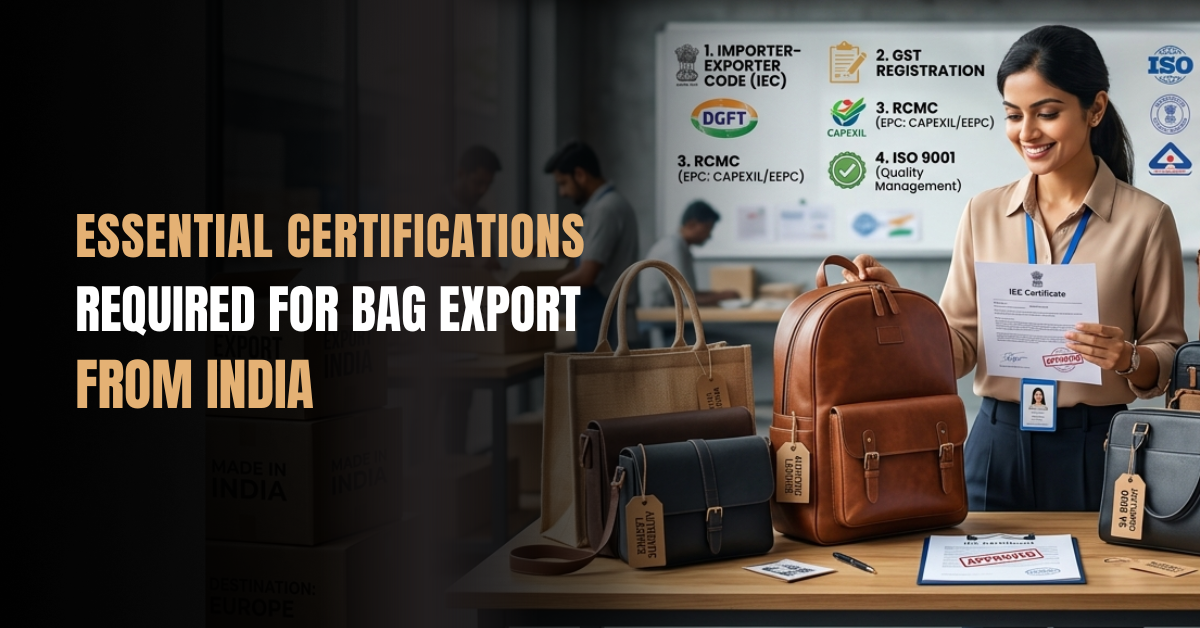
Global demand for high quality bags is growing day by day. Eco friendly Jute Totes, Luxury Leather Backpacks, and more – international buyers are always searching for reliable bag manufacturers in India to fulfill their inventory demands.If you are planning to step into this lucrative market, you might be asking yourself: what certifications are required for bag export to ensure smooth shipping and legal compliance?
Understanding various laws in international trade can be tough. However, obtaining all the right papers is the key to gaining the trust of the worldwide clients. If you are working with bulk bag suppliers or planning to open your own manufacturing plant, getting the necessary certificates will differentiate you from other players.
Let’s break down the essential certifications you need to take your bag business global.
Mandated Government Registrations for Indian Exporters
You need to go through the initial legal registrations mandated by the Government of India before you can seek the product-specific quality labels. These procedures will make your company recognized as an exporter according to law.
- IEC (Importer-Exporter Code): The Directorate General of Foreign Trade gives you this 10-digit code. You need it to customs and send goods outside India.
- RCMC (Registration Cum Membership Certificate): If you want to export bags you should register with a group that helps exporters. For bags made of textile or jute you can register with Texprocil or the Export Promotion Council for Handicrafts. This helps you get benefits from the government.
- GST Registration: You need to register for taxes. This is important for sending goods and getting back the taxes you paid or the duties you paid when you exported something. GST Registration is necessary for exporting goods and getting your money back.
Global Quality and Safety Certifications
International purchasers, particularly in the United States and Europe, demand strict adherence to the standards of product safety and workplace ethics. By working with a high-quality bag supplier, you can be assured that they already hold these internationally accepted credentials.
ISO 9001:2015 (Quality Management System)
Having this certification indicates that your production facility delivers consistently high levels of quality products. It assures your customers that the products produced at your manufacturing site comply with the international production standards established for such products.
CE Marking and REACH Compliance
Individuals targeting the European market need to know what certifications are required for bag export related to chemical safety. Compliance with REACH guarantees that bags do not contain hazardous azo dyes, toxic chemicals, and heavy metals. CE marking may also be necessary for some electronic or functional bags.
Sustainability and Social Compliance Certifications
Current buyers are concerned about the manufacturing process of the goods they buy. Having sustainability certificates will allow you to attract major deals with global retail corporations. Companies like Okda Lifestyle have raised the bar by focusing on compliance and premium quality.
GOTS (Global Organic Textile Standard)
Are you thinking of exporting canvas bags made from organic cotton? GOTS certification is what you need. It monitors all the supply chain steps to confirm that the raw materials are truly organic and processed responsibly.
Sedex (SMETA Audit)
Numerous international purchasers will not consider working with a bag manufacturer without the completion of a social compliance audit. A Sedex audit shows that your factory pays fair wages, has safe working conditions, and does not allow child labor at all.
Step-by-Step Compliance Checklist for Bag Exporting
To make things simple here is a checklist to help you organize your export journey:
- Set up your business as a proprietorship, LLP or Private Limited company. You need to incorporate your business
- Apply for your Import Export Code online through the DGFT website.
- Choose what kind of bags you want to export like leather, cotton or synthetic bags. Then find a bag manufacturer to work with if you are not making them yourself.
- Test your bag samples at labs like SGS or Intertek. This ensures they meet the chemical and material laws of the country you are exporting to.
- Get export packaging to protect the bags. This will keep them safe from moisture and fungal growth during sea voyages.
Conclusion
Indian businesses can tap into the huge growth potential offered by the international bag market. However, success depends largely on meeting international quality standards. It is for Indian entrepreneurs to find out what certifications are required for bag exports, including various government codes and social audits like Sedex that are required to make a local business a global brand.
In order to successfully grow your international business, make sure to align your business practices with certified standards and collaborate with credible compliance-based companies. Secure the necessary accreditation, carry out internal reviews of your supply chain, and get ready to make Indian craftsmanship available for sale in the whole world.




No comment