
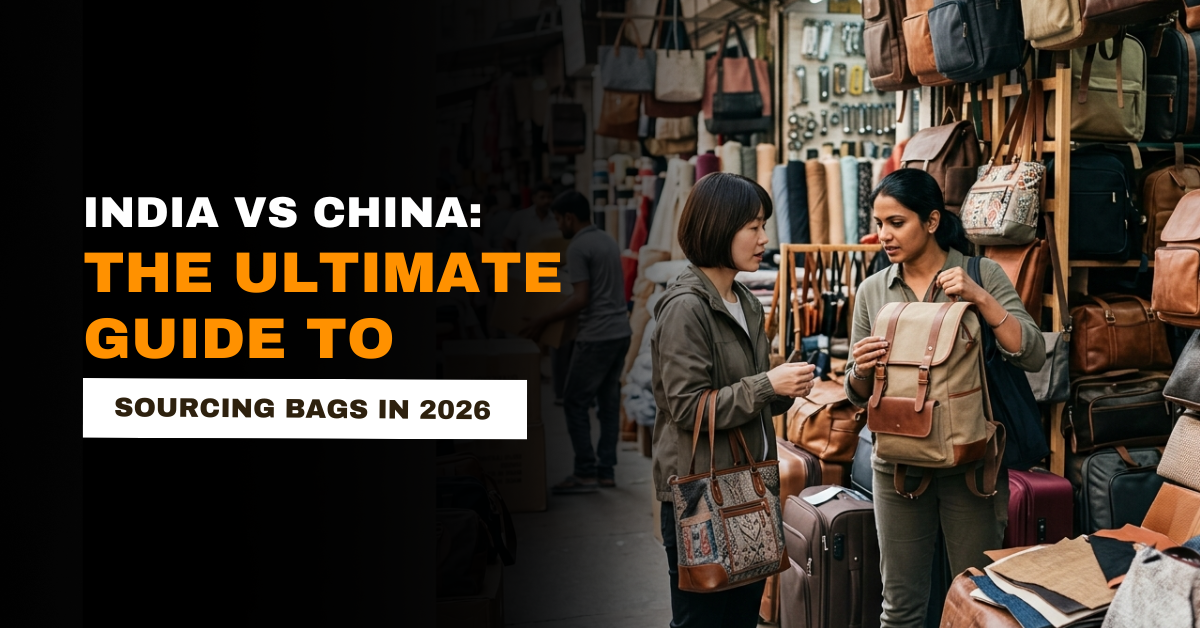
India vs China: The Ultimate Guide to Sourcing Bags in 2026
When searching for your ideal factory or manufacturing partner for your bag brand can sometimes be daunting. For a long time, one country used to dominate the worldwide market. But today, with a dramatic shift in the supply chain landscape, companies are now comparing their options of sourcing bags from India vs China – with a focus on price, quality and compliance.
If you are a fashion brand, retail or promotion company, selecting one of the two manufacturing titans will be a pivotal decision in your company’s strategy. Let us analyze the advantages and disadvantages of both regions to help you decide on which side of the fence to fall.
The Shift in Global Bag Manufacturing
For many years, mass production was synonymous with China. If you needed millions of polyester backpacks at rock bottom prices, the clear choice was distributing through Chinese factories. They created massive supply chains, highly automated processes, and rapid distribution capabilities.
However, this will all change in 2026. With increasing labor costs in China, shifting trade tariffs, and a significant global trend toward sustainability, there are now many compelling reasons to develop alternatives to producing these products in China.
It’s India’s time to shine. Brands see India as an excellent source of skilled labor, low prices, and abundant raw materials for product creation. When considering sustainable, contemporary brands, sourcing bags from India Vs China will be part of the solution.
Sourcing Bags from India: Sustainability and Craftsmanship
India’s reputation as a high-quality manufacturing center has grown swiftly. If your brand is interested in eco-friendly materials, ethical production and distinctive designs, you will likely find that sourcing your bags from an Indian bag supplier is your best option.
The Eco-Friendly Advantage
India is the top producer of jute and organic cotton in the world. With an increased demand for eco-friendly products, having a fabric bag manufacturer in India can help you get direct access to the raw materials of jute and organic cotton. India is leading in green packaging and clothing.
Lower Minimum Order Quantities (MOQs)
The large-scale factories in China typically require thousands of pieces for each style of production. However, most of the bag manufacturers in India are much more accommodating. Many of the manufacturers will create a sample in many cases and will generally work with lower quantities, which makes them especially suited for small startup businesses, boutique businesses, or premium brands looking to test a new design.
Skilled Handcrafted Details
India’s textile and craft tradition is deep and long-lasting. If your product requires fine embroidery, a special kind of weave, or high-quality leather, the character and craftsmanship of Indian factories provide a level of artistry far beyond what any automated machine can produce.
Major players like Okda Lifestyle have achieved a perfect balance between the strengths of traditional Indian materials and modern global design standards, enabling them to compete successfully in all international markets.
Sourcing Bags from China: Speed and Scale
China’s status as a leading global player is well-deserved. Companies relying heavily on high volume production, advanced synthetics, and quick turnaround still find that China offers unparalleled advantages in all three areas.
Unmatched Infrastructure
A Chinese bag manufacturer works in a well-organized ecosystem. The manufacturing process for all materials, including zippers and buckles, takes place near each other geographically. The establishment of a highly organized setting leads to rapid design and development cycles of manufacturing processes for technical bags such as anti-theft backpacks, camera cases, and heavy-duty sports equipment.
High-Tech Automation
China has made huge investments in robotics and automated cutters. The result is consistent quality in large production volumes. You will find that China is good at producing 50,000 identical nylon duffel bags without any variance.
Rapid Turnaround Times
Because of the proximity of the component supply chain to the factories, almost immediate production can occur. Additionally, China’s ports are among the best in the world and therefore minimize the time it takes for goods to move from the production floor to a container ship.
Head-to-Head Comparison
To help you visualize the core differences when sourcing bags from India vs China, here is a quick summary of how the two manufacturing hubs stack up:
- Raw Material: India has a wealth of raw material available for producing natural, sustainable textiles (cotton, canvas, jute). China produces large volumes of synthetics (nylon, polyester) and performance materials.
- Volume of Production: China is set up for high-volume automated production. India is suited for mid-high volume production, one-off or custom designs, and handcrafted products.
- Tariffs and Trade Issues: When sourcing from India, it is likely that products will not be subject to excessive anti-dumping tariffs or ongoing political trade tensions currently affecting China exports to the US and European Union.
- Communication: The English-speaking population of India is highly proficient at communicating, making for a more efficient communication process throughout the product development cycle.
Conclusion: Which Country Wins in 2026?
When comparing sourcing bags from India Vs China, there are no clear winners – it all depends on your specific business goals, targeted market, and what type of product you want to create.
Choose Chinese suppliers if you expect high degrees of complexity in the design, require synthetically waterproof fabric, anticipate large quantity production, and need to quickly manufacture your product.
Choose India if you want to establish a sustainable brand by manufacturing with high-quality cotton or canvas materials, need the option of flexible minimum order quantities (MOQ), appreciate transparent and prompt communication with suppliers, and wish to avoid heavy import duties and tariffs. By matching your brand to the strengths of specific countries, you will create a manufacturing relationship which works together to grow your business.


No comment