
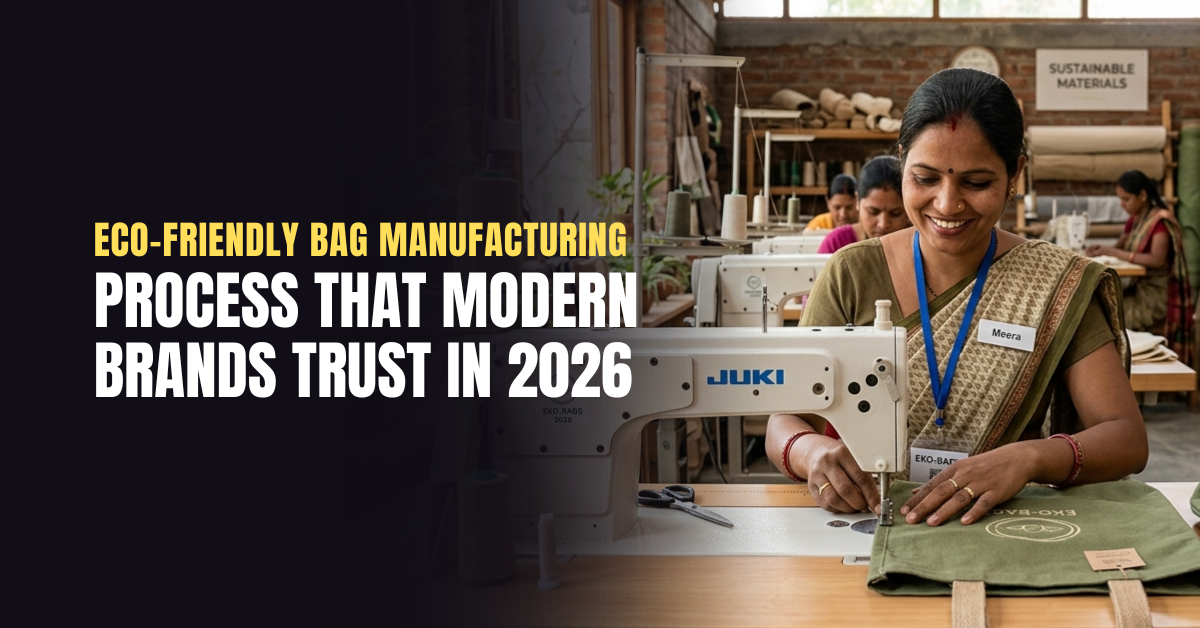
Eco-Friendly Bag Manufacturing Process That Modern Brands Trust in 2026
Consumer habits have really changed over the past few years. Today people do not just buy a product; they buy what the product stands for. For brands that want to stay, having a sustainable supply chain is a must.
At the core of this trend is the eco-friendly bag manufacturing process, which is a waste-free and environmentally friendly way to produce the bags used to transport items. As this trend continues to grow, more progressive brands are collaborating with producers who are committed to environmentally friendly methods from their very first stitch.
What is the Eco-Friendly Bag Manufacturing Process?
The eco-friendly bag manufacturing process is about reducing the harm we do to the environment at every step. Usually making bags the traditional way uses a lot of chemicals, fake materials and a ton of water. Eco-friendly bag production uses renewable energy, non-toxic dyes that are safe for humans, and provides fair treatment to employees who manufacture them.
For a brand, knowing how the eco-friendly bag manufacturing process works is really important. It means you can sell bags that’re strong, look good and you can tell your customers the real story, about how you care about the environment and the eco-friendly bag manufacturing process.
Step-by-Step: From Earth-Friendly Raw Materials to Finished Product
Building a sustainable bag involves specific, carefully monitored steps. a bag manufacturer in India, like Okda Lifestyle that has a lot of experience things usually go smoothly. You can count on them to make the process easy to follow.
Sourcing Sustainable Fibers
The process starts with finding materials that are good for the earth. Of using new plastics or crops that have a lot of chemicals manufacturers choose:
- Organic Cotton: This type of cotton is grown without chemicals.
- Recycled Polyester: Made from discarded plastic bottles, keeping waste out of oceans.
- Jute and Linen: These are plant fibers that can be grown again and again and they need little water.
Eco-Friendly Fabric Processing
After harvesting the fibres, new yarns are then made from those fibres and woven into sheets of fabric. During this process, a canvas bag manufacturer that is trusted will only use a safe method of bleaching, including the use of hydrogen peroxide instead of a harsh bleach product. The manufacturer will use low-impact, water based dyes to dye the fabric and therefore will not negatively affect local waterways.
Precision Cutting and Waste Reduction
Factories today have adopted computerized digital nesting applications (computer programs). This software maps out patterns for bags, using a puzzle-like assembly, on large sheets of fabric prior to cutting. The goal of this application is to make the most efficient use of available fabric to reduce excess fabric waste. Any scrap material that is left over will be collected and sent to be recycled into new yarn.
Ethical Assembly and Sewing
To make sure a bag will survive many years of use requires durable stitching. The various panel pieces are assembled using biodegradable, strong threads (as specified by the brand). The factory responsible for making the bags pays fair wages, provides good working conditions, and has environmentally friendly energy sources.
Final Quality Check and Green Packaging
Bags go through a stringent quality assessment before they are shipped out from the facility to ensure that they can withstand daily use. When bags pass inspection, the finished bags will be shipped to you by a reputable bag supplier using plastic-free, biodegradable, or recycled paper packaging.
Why Brands Partner with a Trusted Bag Manufacturer in India
India is emerging as the leading center of Sustainable Textile Manufacturing for worldwide Brands. Worldwide Brands are turning to Indian Bag Manufacturers because of India’s long established history of textile craftsmanship and its rapid growth in green technology adoption.
By partnering with an experienced company such as Okda Lifestyle, you will have access to high-quality organic canvas, cutting edge recycling technology, and large production scale at an affordable price. The combination of affordability and strict adherence to environmental compliance is why businesses today rely on this region for all of their manufacturing needs.
Choosing the right partner ensures that your custom designs are executed perfectly while keeping your carbon footprint remarkably low.
Conclusion: Driving the Future of Sustainable Retail
Transitioning to inventory is a big step to secure your brand’s future. eco-friendly bag manufacturer process uses fibers from sources, water-saving dye methods and low-waste cutting to create products that make consumers feel good about buying eco-friendly bags.
By working with a bag supplier and manufacturer that has experience your business can make strong bags that are good for the environment. When using solutions to fulfill consumers’ wants and needs, you will create long-lasting brand loyalty and aid the environment by using eco-friendly products.


No comment