
How AI and Automation Are Changing Bag Manufacturing in 2026
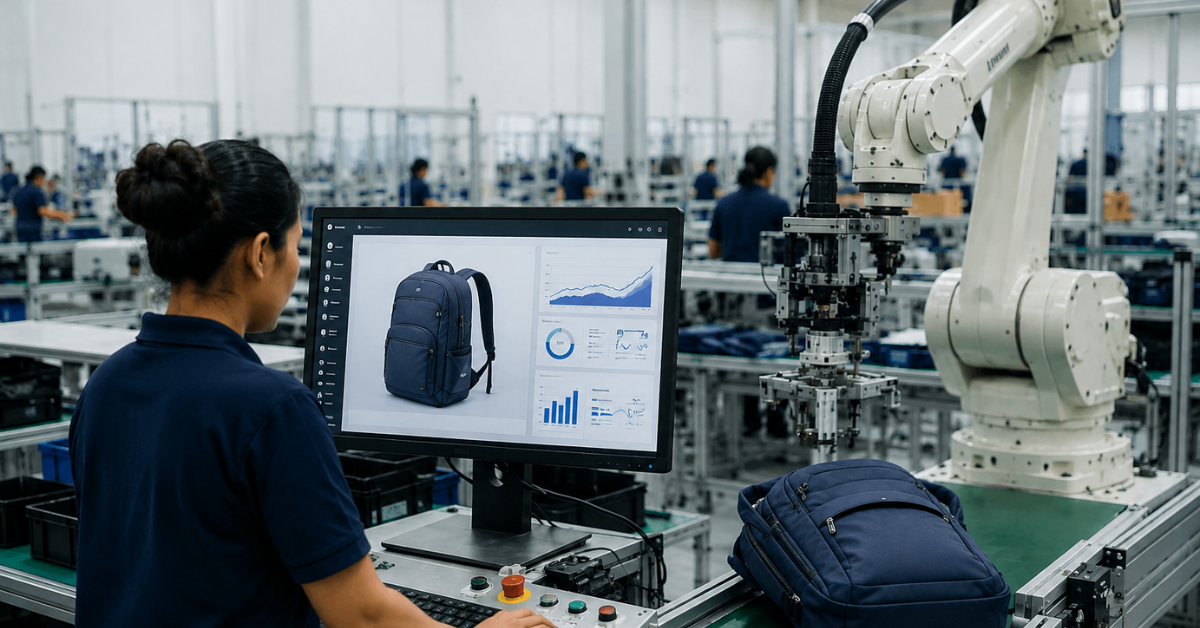
There are rapid changes happening in the bag manufacturing industry in 2026. The existing cut-and-sew methods are being replaced by smarter, technology-based methods. Presently, the use of AI and Automation in Bag Production has enabled the manufacturing of bags at a quicker pace with lower wastage of material.
In the race for continual production and neat sewing brands are needed. Thanks to the new technologies, this is achievable on a daily basis. The best factories in India are introducing these technologies, e.g. Okda Lifestyle, which is a leading bag manufacturer in India.
In order to produce their quality canvas, cotton, and individualized bags great smart processes are used. As a result of this cocktail of technology and proficiency, one can have good products on a daily basis.
In today’s post we will mention how automation is transforming bag manufacturing in 2026.
How AI and Automation in Bag Production Improve Precision and Efficiency
Modern techniques for fabric cutting are more accurate. In the past, fabric cutting methods wasted a lot of fabric and resulted in some inaccuracies.
Laser cutters use smart technology and review the fabric on their own. They create shapes from the material that are as efficient as possible.
Automated technology is also used to make complicated stitches at the time when automated machinery is sewing and placing some elements like zippers, straps and many others.
The main advantages of automatic bag assembly include:
- Smart software can save up to 25% of raw material.
- With the help of AI cameras, machine operators see any loose strings and damaged seams instantly.
- Robotic arms can deliver fabric sheets without any delays between workstations.
- Auto-tension mechanism allows fabric seams to be smooth and even across all fabrics.
Considering how many manual mistakes will be eliminated, the process will be much quicker.
Smart Quality Control and Sustainable Manufacturing
Manual inspection can be time-consuming, and workers can become tired, resulting in small flaws being overlooked.
Since 2026, the camera systems have checked all the bags on the production line, analyzing thousands of stitches every minute and detecting problems.
If a stitch is sloppy, the system sends an alert to the staff immediately preventing defective products from being packed.
Automation also contributes to environmentally friendlier processes in manufacturing.
- Thanks to advanced planning software, ordering too much raw fabric is avoided.
- Machines are switched off automatically when not in use, hence consuming no energy.
- Fabric scraps are sorted easily to be used as raw material again.
Today sustainability is a must for every important brand. Responsible Indian bag manufacturers use these technologies to save the planet.
Thus, they produce goods in a clean manner and keep costs reasonable.
The Role of Smart Factories and Demand Forecasting
Another area where software tools are improving supply chain management is in the manufacturing process. In the past, manufacturers just guessed their production based on estimates of sales.
Today, major AI software can analyze market trends and availability of raw materials in real time. Before orders are even placed, it can pinpoint exactly how much will be needed for the production.
Thus, manufacturers can adhere to their daily production schedules without problems.
Working with a top bag company in India offers key perks:
- Size of orders can be adjusted easily in respect to seasonal events.
- Order tracking updates emphasize the punctual nature of deliveries.
- Automated stitching results in the consistent durability of products.
- Cost efficiency of bulk orders with no compromises in quality.
This successful strategy combines smart technology with human skills which results in superior quality bags.
Conclusion
AI and Automation in Bag Production are helping make bag production quicker, smarter, and more efficient in the year 2026.
From automated cutting and sewing processes to intelligent quality-checking systems, these technologies assist in reducing mistakes, minimizing materials usage, and ensuring consistent quality of the products.
For bag manufacturers in India, the process of automation will also make production planning easier, quicker order processing, and greener manufacturing possible.
However, technology works perfectly only when combined with human expertise. This approach enables manufacturers to produce their bags in a high-quality fashion.
In the future, the role of AI and Automation in Bag Production will help with the development of better bag manufacturing technologies.


No comment