
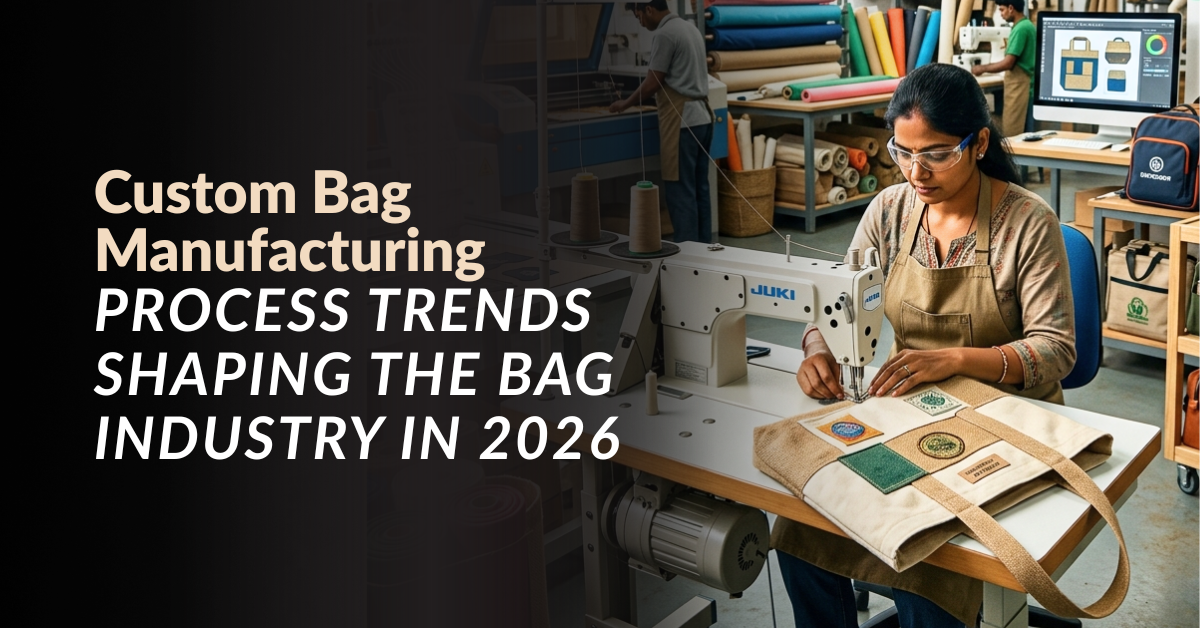
Custom Bag Manufacturing Process Trends Shaping the Bag Industry in 2026
The pace of change in the global fashion scene and accessories industry has accelerated dramatically. The custom bag manufacturing processes have now entered a new phase of evolution from simply cutting out pieces of fabric and sewing them together to the use of advanced technology, eco-friendly materials, and incorporating narrative elements into the finished products.
For businesses that want to stay it is very important to know about these changes. If you have a store or a big shop the way you make your products is going to affect what people think of your brand. Companies like Okda Lifestyle are showing the way by mixing skills with new ideas to meet the new rules that everyone is following now.
-
The Rise of Eco-Friendly Materials and Zero Waste
The most significant change to the custom bag manufacturing process this year has been the emphasis on the earth. In 2026, consumers will examine what they purchase carefully because they expect the accessories they love to impact the environment negatively.
A number of factories have recently stopped using dangerous chemicals and are now utilizing:
- Vegetable-Tanned Leather: A natural substance created with tannins from tree bark instead of toxic chrome.
- Recycled Fabrics: Currently, a vast number of bags are produced from either recycled plastic bottles or reclaimed ocean garbage.
- Zero Waste Cutting: Bag makers can now often save on fabric cost by using sophisticated software that assists them in maximizing fabric usage while cutting their pattern.
Brands can use a bag manufacturer in India to provide their customers with quality products in an ethical way. This movement towards augmenting sustainability will be the new industry norm rather than a passing fad.
-
Smart Technology and AI Integration
The technology is bringing more efficiency into the custom bag manufacturing process. In 2026, the number of Smart Factories rises drastically. This kind of facility makes use of Artificial Intelligence (AI) to predict fashion tendencies and control the inventory.
The modern laser cutting machines have taken the place of scissors used by some elite factories. Every inch of fabric used in producing the product is cut perfectly. For a tote bag manufacturer, this means that its handles are symmetrical, and the seams are perfectly straight.
Smart Packaging also begins to be actively employed. One of such innovations is the addition of the QR-code into the interior part of the bags manufactured. Thus, the client will be able to check all the details concerning its origin and manufacturer.
-
Customization at Scale
Customizing bags used to be a costly and lengthy affair in the past. By 2026, however, the whole procedure will become relatively easy. Digital printing ensures that the tote bag supplier is able to print intricate designs on canvas or leather within minutes.
State-of-the-art manufacturing operations, such as those at Okda Lifestyle, allow manufacturers to offer the following benefits to their customers:
- Reduced Minimum Order Quantities – Small brands can create custom designs without having to purchase thousands of products.
- Faster Prototyping – Using 3D modelling, manufacturers can produce virtual models for their customers, which means that they can visualize how their new bags will look well before production begins.
- Personalisation – Adding names, custom logos and/or unique colours to individual bags is now a standard service provided by manufacturers.
-
India as a Global Manufacturing Hub
India is now a place for making high-quality bags in 2026. The country has a history of skilled workers and now has modern factories. Okda Lifestyle, a leading bag manufacturer in India has proven that it can make world-class bags at a price.
The industry has placed great emphasis on employee welfare and environmentally friendly energy sources. Thus, India becomes the first option for international brands who wish to uphold their ethical practices. From durable school bags to luxurious leather office bags, there is an unparalleled range of bags offered by an Indian bag supplier.
-
Focus on Durability and Function
Style certainly matters but in 2026, the year is that of Functional Fashion, where bags have to be designed and created to last several years, not just one season at a time. The custom bag manufacturing process now features intensive stress tests.
The manufacturers are paying particular attention to:
- Reinforced Sewing: Making sure that straps won’t tear due to heavy loads.
- Waterproof Lining: Protecting the valuable laptop or tablet against rain.
- Ergonomics: Making sure that bags are comfortable to carry around all day.
A dependable tote bag manufacturer today is giving as much attention to the strength of the threads used as they pay to the appearance of fabrics.
Conclusion
The bag manufacturing business of 2026 is characterized by harmony between the heart and advanced technology. The custom bag manufacturing process has been refined to become clean, intelligent, and highly personalized. Sustainable raw material usage, artificial intelligence, and India’s craft have come together to create items of importance.
Whether you work with a tote bag manufacturer for a promotion event or partner with a bag manufacturer for a high-end line these trends show the future of bags is bright. It is also ethical and built to last. Brands, like Okda Lifestyle prove that when you focus on quality and innovation everyone benefits. The creator, the buyer and the planet all win.


No comment