
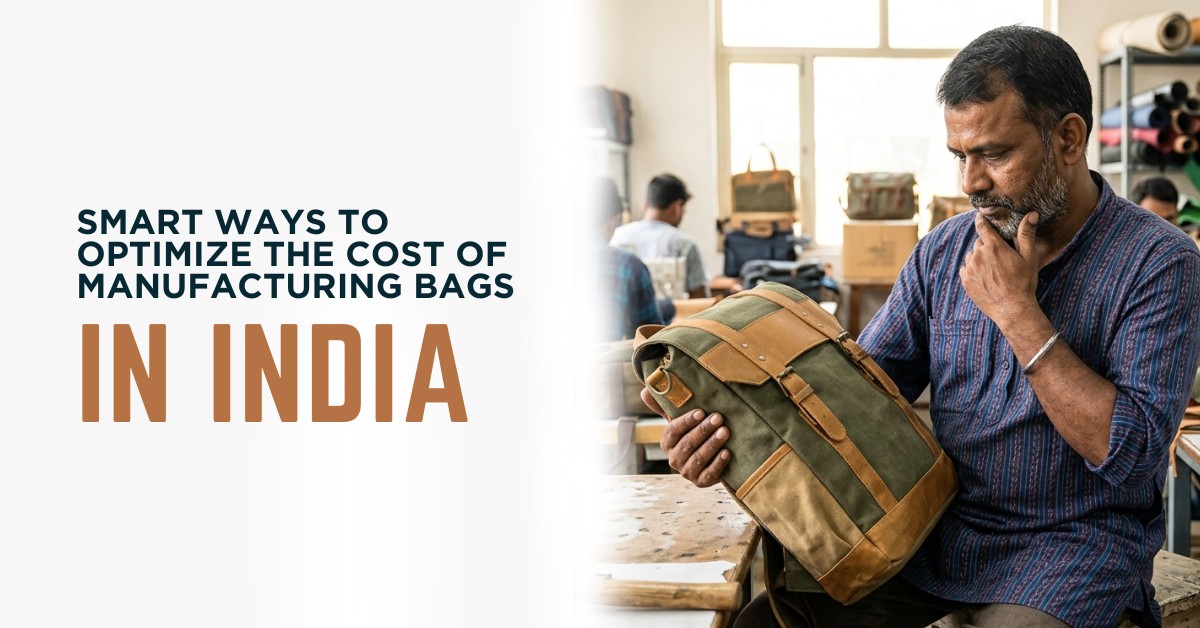
Smart Ways to Optimize the Cost of Manufacturing Bags in India
The key to a successful luggage business is balancing the best quality with the most affordable production possible. If you want to start or grow your bag company, your first step is determining how to develop your production budget.
The cost of manufacturing bags in India depends on several moving parts, from sourcing materials, to labor and shipping. India has developed into a global source of soft goods. By being intelligent and strategic about the decisions you make, you can generally reduce your costs and not sacrifice the final product.
In this article, you will see practical ways to manage your expenses with an industry leading bag manufacturer.
Streamline Material Selection and Sourcing
Fabric and hardware usually make up most of your production costs. To save money you should carefully check what goes into each design.
- Use Local Fabrics: Importing fabrics can be expensive because of shipping fees and import duties. India has a textile market. Buying canvas, polyester, nylon or vegan leather will greatly reduce your initial costs.
- Use Standard Hardware: Custom zippers, buckles and pullers look good. They need special molds and more orders. Using good-quality hardware that you can use across many designs saves a lot of money.
- Combine Materials: If you are launching five bags try to use the same inner lining fabric and zipper types for all of them. Buying these materials in quantities gets you better discounts, from your bag supplier.
Optimize Designs for Manufacturing Efficiency
A beautiful design on paper can be a problem in the factory. Complex cuts and many pockets slow down production, which increases labor costs.
Simple changes during prototyping can reduce the cost of manufacturing bags in India. For example having hidden compartments or tricky curves helps the factory assemble units much faster.
If you work with a Backpack Manufacturer ask their design team to review your design, for manufacturing. They can suggest changes like moving a seam that save fabric and reduce sewing time.
Leverage the Right Batch Sizes (MOQs)
Volume is your biggest ally in the manufacturing industry. Setting up machines for new designs requires time and labor from every factory. If you only place an order for 100 bags, then that setup price will be divided across a very small number of products, resulting in an expensive price per bag.
- Find Your Sweet Spot: Place orders that will meet or slightly exceed the factory’s MOQ.
- Combine Seasonal Orders: Instead of ordering 200 bags every two months, try ordering 600 bags at one time for a longer period of time.
- Limit Colors Used: When there is one design available for your bags in six colors, that’s equivalent to having six smaller batches produced. Try limiting the colors to just two or three that are very much in demand.
Partner with an Efficient Bag Manufacturer in India
Your budget will depend on which factory you decide to use. This is why you should choose an established partner that has modern technology and has experience with lean manufacturing.
An example of a partner is Okda Lifestyle. They are a known bag manufacturer in India and they are good at making bags by hand and also at making lots of bags quickly. If you work with a manufacturer that is organized you will get bad bags, less wasted material and your bags will arrive on time.
When the people who make your bags work well you will save money. That means you can sell your bags for a low price. This helps you compete with people who are selling bags.
Minimize Waste with Smart Pattern Layouts
Material waste is a budget killer. When a factory cuts fabric panels from a roll any leftover pieces are wasted money.
Advanced factories use computer software to fit pattern pieces on the fabric roll, like a puzzle. This makes sure that 90 to 95 percent of the fabric gets used. When you talk to a supplier ask them about their fabric use rates. Keeping waste under 10 percent is a way to save your profits.
Conclusion
Optimizing the cost of manufacturing bags in India does not mean you have to settle for cheap, low-grade products. Instead, it is about making intelligent decisions throughout the production lifecycle.
Using local raw materials, reducing complexity in designs, increasing order amounts and keeping fabric consumption down are all ways to keep your overall costs under control. The key is to partner with a reputable, experienced manufacturer such as Okda Lifestyle who provides quality work in a timely fashion while staying within the scope of your budget.
By utilizing these types of smart business strategies, your brand will be in a very strong position to grow profitably in the highly competitive bag market.



No comment